
Things I'm watching heading into the new year
Physical constraints, legal rules and groundwater management in 2026.

Hi all,
I can hardly believe it’s Dec. 30, and the year is quickly coming to a close. I’m deeply grateful for everyone who subscribed this year, and a special note of gratitude to my paid subscribers. This is a reader-supported venture for me, and your subscriptions help make this work possible. Thank you for supporting my work.
Taking a brief break from writing today to end the year with one last post for 2025.
All the best, and wishing everyone a Happy New Year,
Daniel
1. Hydrology and physical constraints
The water year across the Southwest, at least in terms of snowpack accumulation, is off to an unpromising start in many places. Yes, recent storms last week brought some relief to basins in the Sierra and Western Nevada, with hopefully on the way. While I was writing, California released its snow survey showing snowpack at 71% of average.
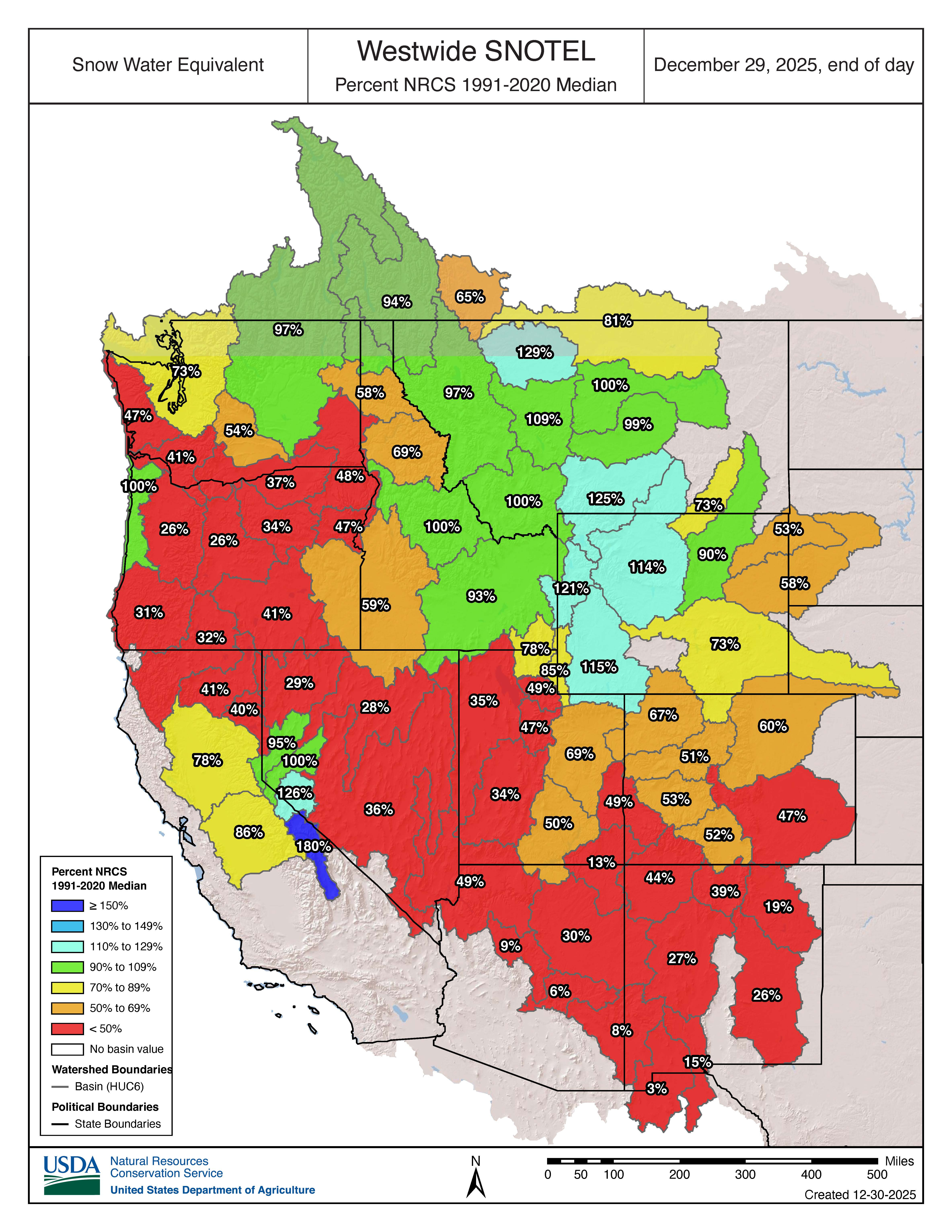
It’s still far too early to tell what will happen. The 2024 Water Year in the Upper Colorado River Basin (the orange line below), for instance, started below average and ended slightly above average. For comparison, the 2026 Water Year is shaded in black.
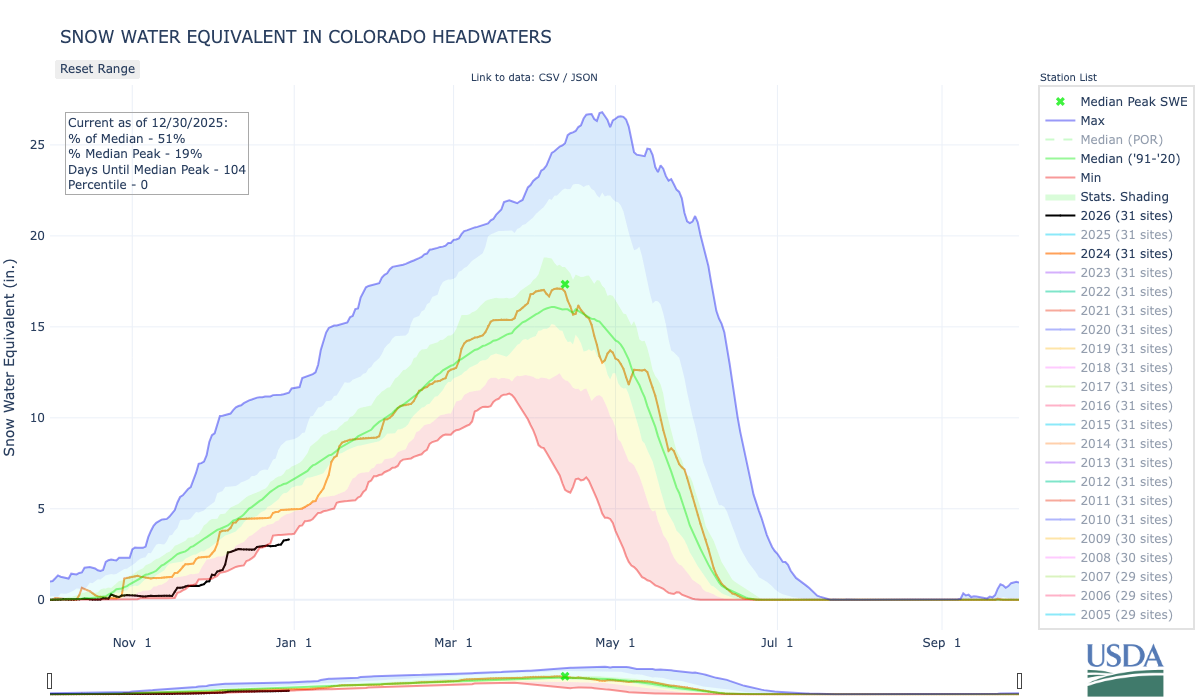
Again, none of this is static. My point in showing these charts is that they highlight important trends to watch into 2026. The hydrology, perhaps more than anything else, could dictate much of what happens next year, especially on the Colorado River Basin.
Hydrology can impose immediate physical constraints, and when those limits collide with existing legal and political constraints — like the inability to reach a deal on new operating guidelines for the river — one crisis can give way to another.
The U.S. Bureau of Reclamation’s projections show that Lake Powell, under a worst-case hydrologic forecast, could fall so low by September 2026 that the Glen Canyon Dam would no longer be able to generate power, as Tony Davis from the Arizona Daily Star reports. This would also mean water would have to flow through the dam’s outlet works, which were not designed for large volumes of water.
2. Is it Prior Appropriation, or is it something else?
Building on that point, I’ve been thinking through the mechanisms and circumstances that actually influence policy, whether that policy is a result of legal enforcement or voluntary collaboration. Hydrology certainly is one. And of course, priority is certainly another.
Keep reading with a 7-day free trial
Subscribe to Invisible Waters to keep reading this post and get 7 days of free access to the full post archives.